

Beneath the Profaned Sky of the World The Immortal Voice of Palestinian Poet Mahmoud Darwish
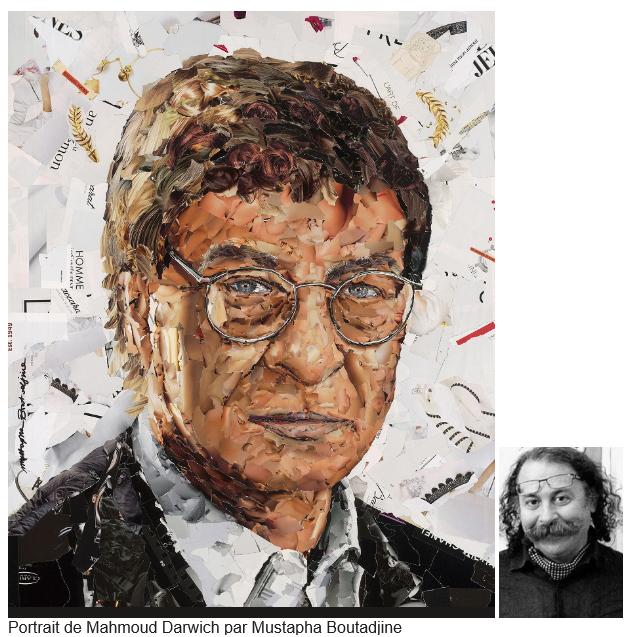
Eighteen years after his death on 9 August 2008, Mahmoud Darwish remains one of the defining voices of contemporary poetry. Deeply and unmistakably Palestinian, he nevertheless resisted being confined to the role of “poet of resistance”. From the lost home to the almond blossom, from exile to love, his poetry carried Palestine beyond geography and history, into the realm of universal human experience.
Eighteen years have passed since Mahmoud Darwish died in Houston, Texas, on 9 August 2008, following heart surgery. He was 67. And yet his voice has lost none of its urgency. Beneath the profaned sky of our world, Darwish seems, if anything, more present than ever: a poet speaking from a wounded land, but also far beyond it, to anyone for whom poetry remains a way of preserving dignity, memory and the ability to stand upright in the face of history.
Mahmoud Darwish was born on 13 March 1941 in Al-Birwa, a village in Galilee near Acre, in Palestine under the British Mandate. In 1948, war forced his family to flee to Lebanon. When they returned clandestinely the following year, Al-Birwa had been destroyed. They settled elsewhere in Galilee. For the young Darwish, this was one of the formative shocks of a lifetime: to return home and discover that home itself had disappeared. That vanished place would become both a wound and an inexhaustible source of poetry. For Darwish, Palestine was never simply a territory on a map. It was a house, a tree, a scent, a mother preparing coffee, a familiar path suddenly erased. It was memory made physical. It was also the stubborn act of continuing to inhabit, through language, what history had taken away.
After his youth in Galilee and Haifa, Darwish left Israel in the early 1970s. Moscow, Cairo, Beirut, Tunis, Paris: his life came to mirror the geography of Palestinian exile. In Beirut, he lived through war and the siege of 1982. A member of the Executive Committee of the Palestine Liberation Organization, he resigned in 1993 over his opposition to the Oslo Accords, which he regarded as inadequate and dangerously incomplete. In 1995, he was able to return to the Palestinian territories, later dividing his time largely between Ramallah and Amman.
The author of dozens of volumes of poetry and prose, translated across the world, Darwish became one of the towering figures of modern Arabic literature. But fame brought with it a paradox. The more he came to embody the Palestinian voice in the eyes of the world, the more insistently he defended the freedom of poetry from political confinement.
A Poet of Palestine - but Never Only of Palestine
Darwish never denied being a Palestinian poet. What he rejected was the idea that this identity should exhaust the meaning of his work. In Conversations on Poetry, with the Lebanese poets and writers Abdo Wazen and Abbas Beydoun, published in French by Actes Sud in 2006 in Farouk Mardam-Bey’s translation, Wazen asks him how he feels about being described as “the poet of a cause”, “the poet of resistance” or “the poet of Palestine”. Darwish’s response is unequivocal: “I can do nothing about it except say, and keep repeating, that I refuse to be confined within such a label.” He accepted being Palestinian. He accepted being a Palestinian poet. But he refused to see his work reduced to a poetic chronicle of a national struggle. When his interviewer reminded him that, whether he wished it or not, he had become a symbolic poet, Darwish acknowledged the burden that came with such a role: “I would rather be freed from this very heavy burden.” This refusal was not a retreat from Palestine. It was, in many ways, a deeper commitment to it.Darwish understood that poetry serves a people more profoundly when it refuses to become a slogan. He spoke instead of “aesthetic resistance”. For him, resistance also meant renewing language, widening the human horizon, refusing repetition and preserving the right to beauty. Being Palestinian should not prevent a poet from contemplating a sunset, loving a woman, listening to music, feeling the first rain or standing before an almond tree in bloom. Violence seeks not only to destroy bodies and places; it also threatens the human capacity to perceive beauty. To preserve that capacity, in Darwish’s vision, was itself an act of resistance. This idea would become increasingly central to his later work.
From a Mother’s Bread to the Almond Blossom
At the beginning, there is the mother. In one of Darwish’s best-known early poems, To My Mother, a single line has become unforgettable:
“I long for my mother’s bread.” Bread. Coffee. Familiar gestures. An entire experience of exile enters through the senses. The mother is not initially a political symbol or a literary construction. She is simply his mother. Yet because the poem reaches so deeply into personal memory, she gradually comes to embody something larger: childhood, home, the lost land, the place to which one longs to return.
The poem appears, among other collections, in the French volume La Terre nous est étroite et autres poèmes (1966–1999), translated by Elias Sanbar.Then comes State of Siege. Ramallah, 2002. The city is encircled. History presses against doors and windows. Darwish answers with fragmented poetry in which ordinary life, waiting and death occupy the same narrow space. Amid the devastation comes a sentence of startling simplicity: “We cultivate hope.” There is nothing naïve about this hope. For Darwish, hope is almost a discipline: something that must be cultivated precisely when every circumstance invites despair.
In an interview with the French newspaper Le Monde in March 2002, he described hope as “an incurable disease among Palestinians”. But the hope he spoke of was not for perpetual heroism. It was the hope of an ordinary life, a life in which Palestinians might be “neither heroes nor victims”. Those words carry a painful resonance today. Darwish did not want the Palestinian to be eternally imprisoned in the mythology of heroic suffering. He wanted something at once simpler and more radical: the right to be human. To love. To walk. To work. To drink coffee. To watch children grow. To contemplate a flower. Perhaps this is why the almond tree acquires such luminosity in his later poetry.
In Like Almond Blossoms or Beyond, published in French by Actes Sud in 2007 in Elias Sanbar’s translation, the poetic landscape has subtly shifted. Palestine remains everywhere. But Darwish’s language reaches beyond the political and historical frame towards the ephemeral: whiteness, light, mortality, love, and the mystery of simply being alive. In “To Describe an Almond Blossom”, he writes:
“No homeland and no exile but words.” The almond tree is no longer simply a tree rooted in Palestinian soil. Its fragile blossom becomes almost an apparition.
How can language describe its whiteness without diminishing it? How can beauty be named without being captured? How can words contain what seems, by its very nature, to escape them? Between the mother’s bread and the almond blossom lies almost the entire arc of Darwish’s poetic journey.
Palestine as a Universal Human Experience
For readers approaching Darwish today, the Anthology (1992–2005) offers a remarkable point of entry. Selected and introduced by Farouk Mardam-Bey, translated from Arabic into French by Elias Sanbar and published by Actes Sud, it brings together poems from seven collections. It reveals an extraordinary evolution: the more deeply Darwish’s work enters the Palestinian experience, the wider its human horizon becomes. That may be the defining paradox and achievement, of his poetry: Mahmoud Darwish never ceased to be the Palestinian poet precisely because he refused to be only that. Palestine in his work is concrete. It is a real land, a real history, a real dispossession. But it also becomes a metaphor for exile, absence and memory, for the experience of human beings confronted with what has been taken from them.
Darwish transforms a particular history into questions that can belong to anyone.
What is a homeland when one has been deprived of it? Where does exile begin?
Does a destroyed house continue to exist inside the person who remembers it?
And what remains when power seeks to deprive a human being even of the right to name the world? arwish’s answer was poetry. Not poetry as an escape from history, but poetry as a way of resisting history without surrendering language to it. He knew that words do not stop bombs. They do not halt tanks. But he also knew that the power capable of destroying a house cannot alone determine what that house means. An uprooted tree does not necessarily disappear from memory.And a person deprived of land may still oppose the language of force with another language: the language of beauty.
In Conversations on Poetry, Darwish expresses this conviction with characteristic clarity. Poetry, he believed, could defend “the ordinary life within us” and resist “ugliness through beauty”. Eighteen years after his death, that conviction endures. Mahmoud Darwish is buried in Ramallah. His voice, however, crossed borders long before his death. It belongs first to Palestinians, whose memory, wounds and hopes it carries. It belongs equally to Arabic literature. And it now belongs to the universal inheritance of poetry. Beneath the profaned sky of the world, at a time when history so often appears determined to condemn humanity to the repetition of its tragedies, the images of Darwish return: The mother’s bread. The vanished house. Hope cultivated under siege. And beyond walls, checkpoints and borders, the fragile whiteness of an almond blossom. Mahmoud Darwish turned dispossession itself into a territory no power can confiscate: the territory of poetry.
Fatima Guemiah
August 2026
Selected Bibliography
Works cited in this article
La Terre nous est étroite et autres poèmes, trans. Elias Sanbar, Gallimard, “Poésie” collection, 2000.
État de siège, illustrations by Olivier Thébaud, trans. Elias Sanbar, Actes Sud, 2004.
Entretiens sur la poésie, with Abdo Wazen and Abbas Beydoun, trans. Farouk Mardam-Bey, Actes Sud, 2006.
Comme des fleurs d’amandier ou plus loin, trans. Elias Sanbar, Actes Sud, 2007.
Other works translated into French
L’Exil recommencé, trans. Elias Sanbar, Actes Sud, 2013.
Nous choisirons Sophocle et autres poèmes, trans. Elias Sanbar, Actes Sud, 2011.
Le Lanceur de dés et autres poèmes, photographs by Ernest Pignon-Ernest, trans. Elias Sanbar, Actes Sud, 2010.
Une nation en exil : hymnes gravés, followed by La Qasida de Beyrouth, with Rachid Koraichi, trans. Elias Sanbar, Actes Sud, 2010.
Anthologie poétique, trans. Elias Sanbar, Actes Sud, 2009.
La Trace du papillon. Journal poétique (été 2006–été 2007), trans. Elias Sanbar, Actes Sud, 2009.
Je ne veux pas de fin à ce poème…, Riyad El-Rayyes, 2009.
Ne t’excuse pas, trans. Elias Sanbar, Actes Sud, 2006.
Murale, trans. Elias Sanbar, Actes Sud, 2003.
Le Lit de l’étrangère, trans. Elias Sanbar, Actes Sud, 2000.
Au dernier soir sur cette terre, trans. Elias Sanbar, Actes Sud, 1999.
La Palestine comme métaphore, trans. Elias Sanbar, Actes Sud, 1997.
Pourquoi as-tu laissé le cheval à sa solitude ?, trans. Elias Sanbar, Actes Sud, 1996.
Une mémoire pour l’oubli, trans. Yves Gonzalez-Quijano and Farouk Mardam-Bey, Actes Sud, 1994.
Plus rares sont les roses, trans. Abdellatif Laâbi, Éditions de Minuit, 1989.
Chronique de la tristesse ordinaire, followed by Poèmes palestiniens, trans. Olivier Carré, Éditions du Cerf, 1989.
Palestine, mon pays : l’affaire du poème, with Simone Bitton, Ouri Avnéri and Matitiahu Peled, Éditions de Minuit, 1988.
Rien qu’une autre année. Anthologie poétique (1966–1982), trans. Abdellatif Laâbi, Éditions de Minuit, 1983.
